Guest Author Maung Htin Aung: The 3 Dragon Eggs

KONICA MINOLTA DIGITAL CAMERA

A Burmese Folktale

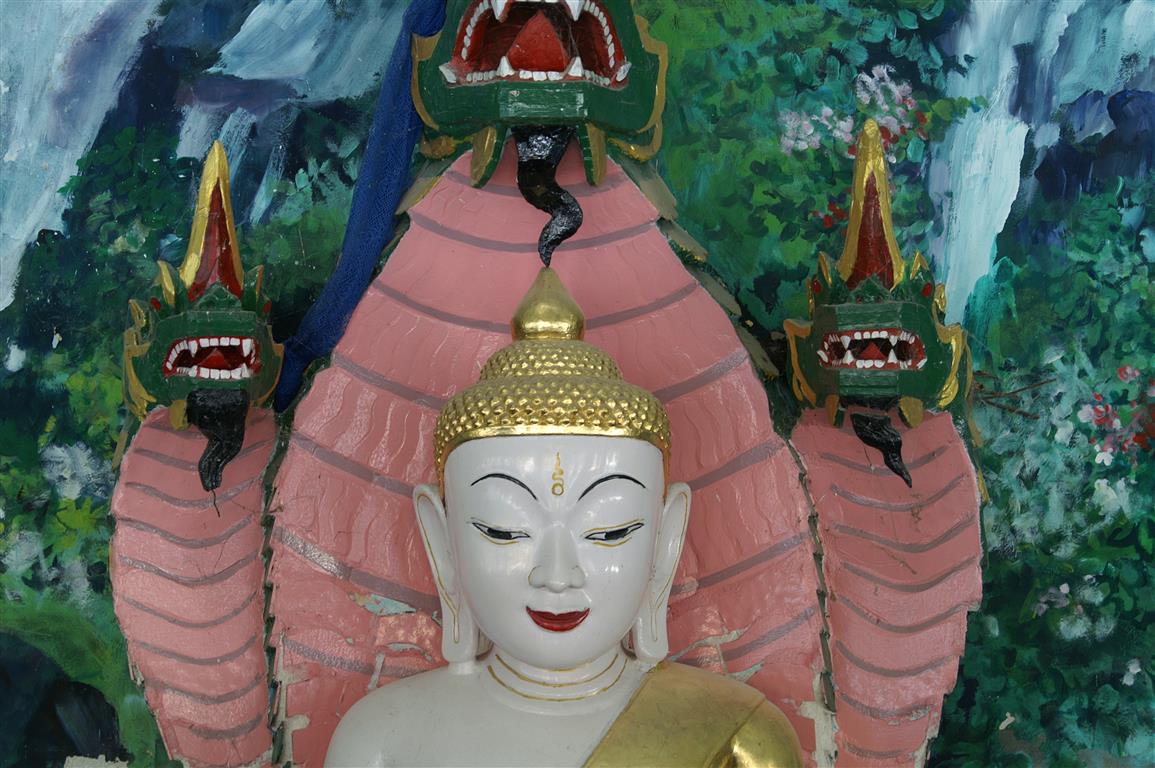
In the hills of Northern Burma there once lived a dragon princess. She was very beautiful, and the sun god fell in love with her. So he came down from the sky, and lived with her for some time. Then he returned to the sky. Later, the dragon princess gave birth to 3 eggs, and she carefully looked after them. When the eggs were nearly hatched, she called the crow to her and asked him to go and tell the sun god that his 3 children would soon be hatched.

At the time, the crow was snow-white in colour. The crow flew to the sun god and gave his the message. The sun god brought out a ruby, which was worth a kingdom, from among his treasures and said to the crow.

“Tell my beloved that I cannot come and see the children. But give her this ruby, and ask her to buy a kingdom with it, so that my children can rule over it.” Then the sun god wrapped up the ruby in a piece of cloth, and gave it to the crow, which flew toward the Northern hills of Burma with the bundle in his beak.

On the way, the crow saw a caravan of 500 merchants. The merchants were having their breakfast, and hundreds of birds were hopping about nearby, gobbling up the morsels of food thrown to them by the merchants. The crow felt hungry, and alighted not far away.

After hiding his bundle under a bush, he joined the other birds. One of the merchants saw the crow hiding the bundle, and he stole toward the bush without letting the crow see him. He found the ruby in the bundle, and took the jewel, replacing it with a piece of cow dung. The crow, after having his fill, picked up the bundle and, without realizing that he ruby had been stolen, flew on to the dragon princess.

The princess received the message and the bundle in great joy, but her joy soon turned to sorrow when she found only a piece of cow dung in the bundle. She died soon after of a broken heart. When the sun god learned of the tragedy later, he scorched the feathers of the crow as punishment for losing the ruby. Since that time the crow has been black in colour.

The eggs lay neglected for many days and they did not hatch as there was no mother to look after them. When the rains came, the eggs were washed into the Ayeyarwady, and they floated down the great river. When they reached Mogok, one of the eggs struck against a rock and broke, and countless numbers of rubies fell out of it.

That is why there are rubies at Mogok. When the two remaining eggs reached middle Burma, one egg struck against a rock, and a tiger came out of the broken egg. The last egg reached lower Burma, where it struck against a rock and a crocodile came out. So the tigers and the crocodiles of the present day are descendants of the tiger and the crocodile who were the children of the dragon princess and the sun god.
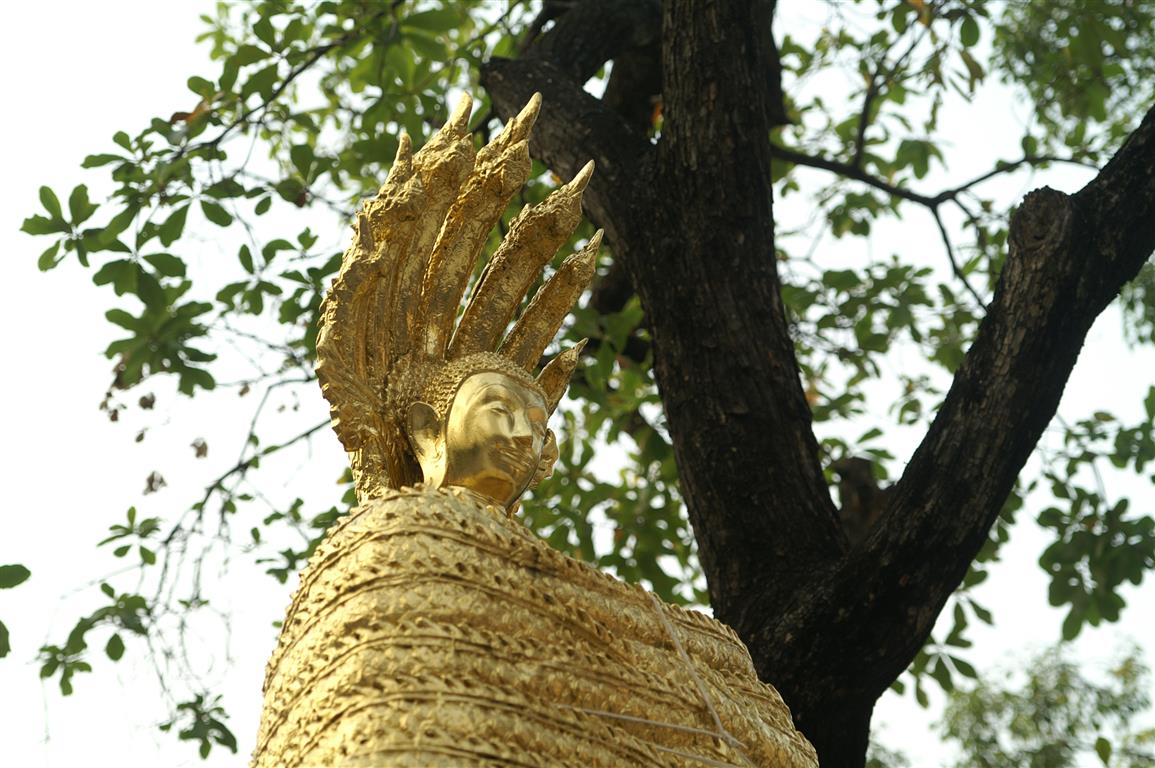
KONICA MINOLTA DIGITAL CAMERA

Veröffentlicht unter Autoren zu Gast/Guest Authors, Burma, Reise, Sabine’s world: A travel diary | Verschlagwortet mit , , , , , | Hinterlasse einen Kommentar

Frei sein …

DSCF0407 (Medium)„Frei sein! Die Welt entdecken, andere Menschen kennen lernen und vielleicht auch ein bisschen besser sich selbst. Wer weiß denn schon, was die Zukunft bringt! Alles ist möglich.“

Foto: Enric Boixadós

Veröffentlicht unter Reise, Sabine’s world: A travel diary | Verschlagwortet mit , , , , | Hinterlasse einen Kommentar

Yangon University – Return to Glory?

KONICA MINOLTA DIGITAL CAMERA“I came here because of my respect for this university. It was here at this school where opposition to colonial rule first took hold. It was here that Aung San edited a magazine before leading an independence movement. It was here that U Thant learned the ways of the world before guiding it at the United Nations.

Here students demanded their basic human rights. The future of this country will be determined by the education of its youth.”

Barack Obama, US-President

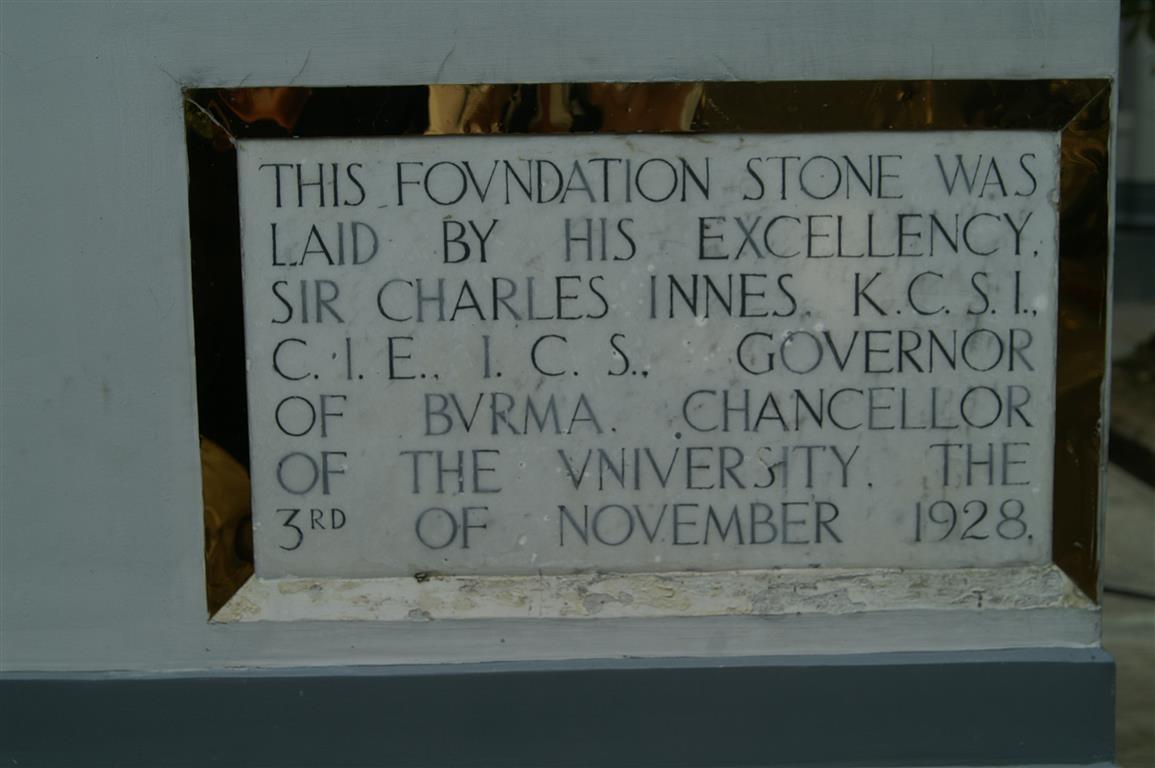
The university was founded in 1920 as Rangoon University, and from the very start it established itself as the epicentre of strikes against the foreign colonial administration and, years later, against the homegrown military government.

Yangon University war recently thrust onto the international stage when it was chosen as the site where president Barack Obama delvered his keynote speech during his visitti to Myanmar in November 2012.

In the middle fot the 20th century the university was among the most impressive institutions of higher learning in all of Asia, but years of neglect at the hands of an military government ensured the school’s fall from its lofty heights into the dark pits of irrelevance. But the country finds itself trudging along a path towards building a new government that the people of the country hope will someday resemble genuine democracy, and forces are working to restore the university to its former glory. These forces also want to rebuild the Student Union building – dynamited in 1962 by the military in response to a student protest.

In 1920 the act has been established that all students must room and board at the school, putting the university beyond the reach of poor people because of the high living expenses.

KONICA MINOLTA DIGITAL CAMERA

As a result to the act young people who intended to become students at Rangoon University protested against it, two days before the opening of the school. The strike movement spread across the nation. Although it failed to convince administrators to change the university act, it set an early precedent for student protests in Burma.

The 1920s and 1930s also saw the enrolment of many students who would later help shape the history of Myanmar. Independence leader Aung San began studying at the university in 1933. Finally, in the years before the outbreak of World War II, the school was considered the best in Southeast Asia. Among other attributes, Rangoon University could also boast one of the best libraries in the region, with a huge collection of Myanmar and English language books, old Myanmar manuscripts and periodicals dating back to the 16th century. In the pre-war years, the university was also attended by many students from Malaysia, Thailand and Singapore. Many of them became leading figures in academics, politics and economics and graduates from the school had no trouble continuing their studies abroad.

KONICA MINOLTA DIGITAL CAMERAThe good times came to an end in 1962, when U Ne Win seized control of Myanmar in a military coup. It was the beginning of a relentless 50-year downward spiral from which Myanmar will take decades to recover. U Ne Win made it clear from the very beginning of his reign of terror how little he cared for education – or for human rights – when he responded to a campus protest by ordering that the Student Union building be dynamited on July 8, 1962.

The university was further undermined in 1964 when key departments were put under government control, and faculties were transferred to state-run institutions. In 1988 the government closed the campus in response to a popular call by the people for the military to cede power to a democratically elected government.

The result is well known: The armed forces massacred its own citizens in the streets of Yangon. The university was closed from 1988 to 1991. Since its reopening Yangon University has accepted small numbers of master’s and doctorate students. Until recently, undergraduates must study at remote campuses.

KONICA MINOLTA DIGITAL CAMERAYangon University’s campus remains a virtual graveyard when compared with its pre-junta glory days. It remains to be seen whether the school will regain the status once held, and, if so, how long it will take to repair the damage once done by a military government that, over the course of decades, demolished the educational hopes and dreams of generations of people in Myanmar.

“The education system in particular has never been recovered from the lingering slump that started at that time.”

U Thaw Kaung, retired university librarian


Veröffentlicht unter Burma, Reise, Sabine’s world: A travel diary | Verschlagwortet mit , , , , , | Hinterlasse einen Kommentar

3 weeks!

sabine-9636 (Medium)

3 weeks traveling in Myanmar/Burma.
3 weeks without my dog.
3 weeks in which I took a break from E-Mails, from writing stories, from my work.
3 weeks in which my eyes never really closed, and my mind never stopped learning.
3 weeks on the go using all kind of transportations: planes, taxis, buses, motorbikes, boats.
3 weeks of discoveries, laughs, satisfactions and disappointments.
3 weeks of black and white moments, but fulfilled with all kind of colours.
2 days spent with old friends.

Photo: Nicola Mesken

Veröffentlicht unter Glücksbote, Reise, Sabine’s world: A travel diary | Verschlagwortet mit , , , , , | Hinterlasse einen Kommentar

Burma remains a world apart

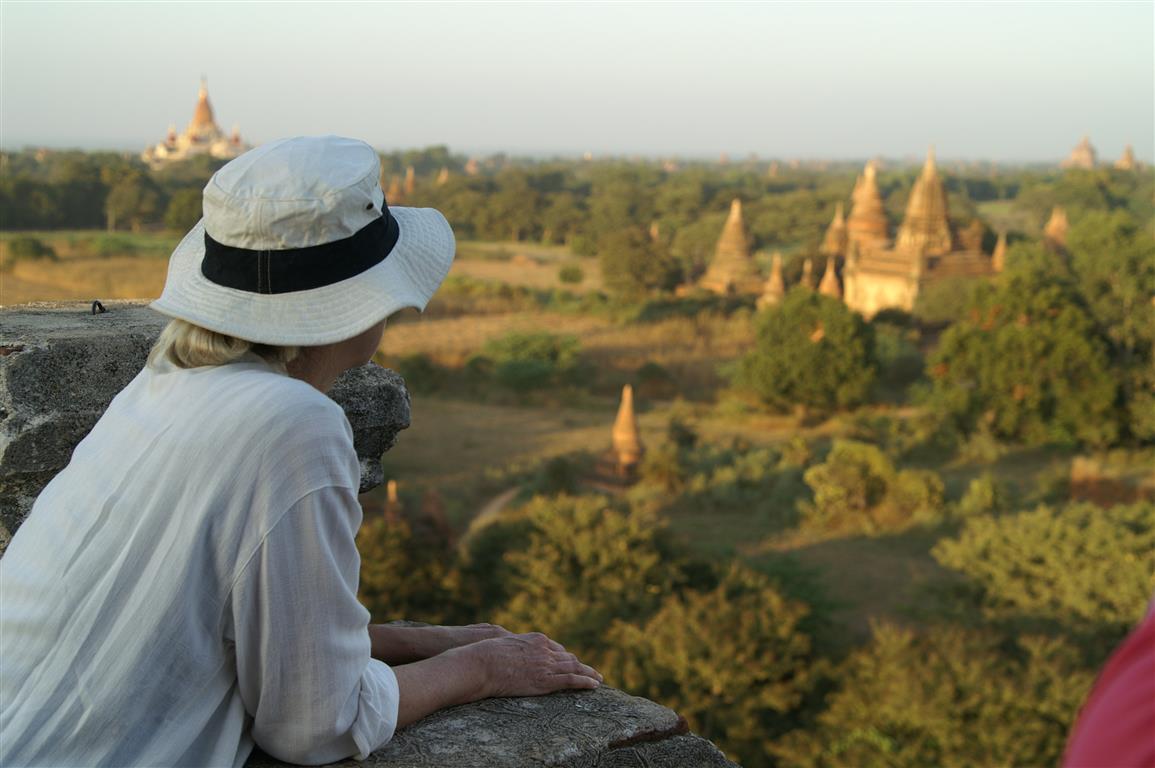
“This is Burma”, wrote Rudyard Kipling. “It is quite unlike any place you know about.” And he was right. More than a century later Myanmar remains a world apart.

DSCF0291 (Medium)

Photo: Enric Boixadós


Veröffentlicht unter Burma, Reise, Sabine’s world: A travel diary | Verschlagwortet mit , , , | Hinterlasse einen Kommentar

Burmese drink: Myanmar Milk Tea

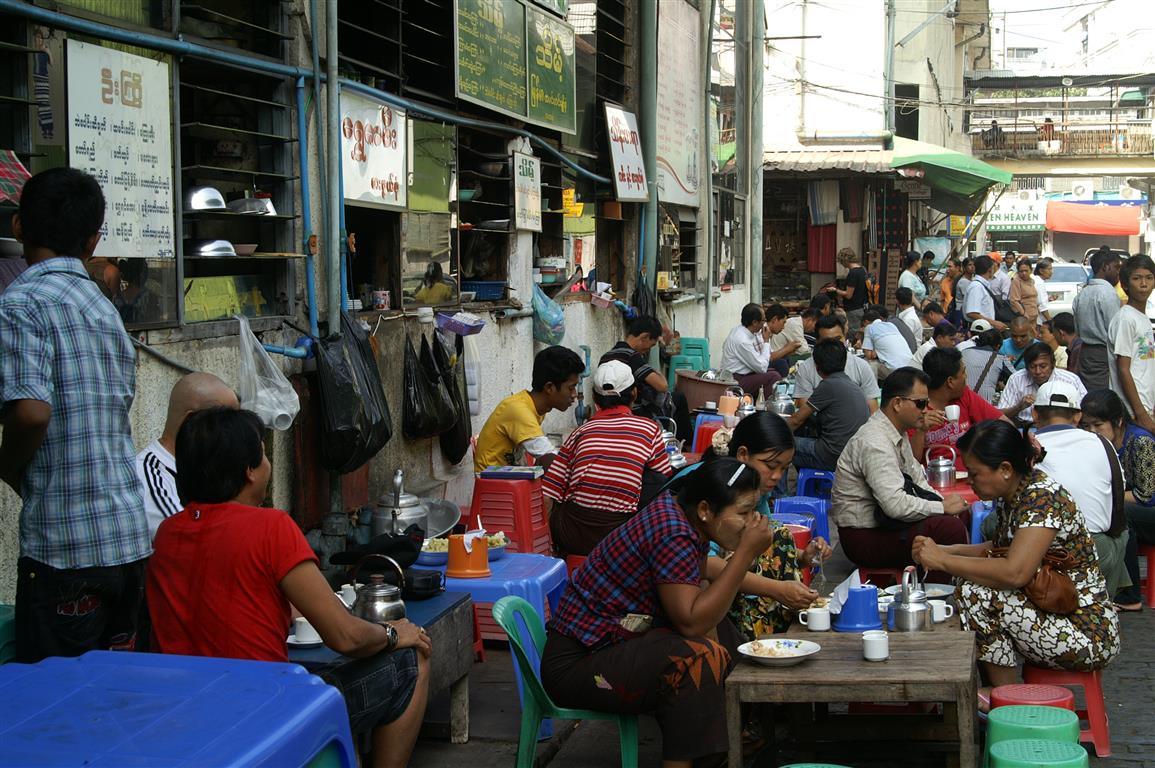
KONICA MINOLTA DIGITAL CAMERATea looms large in Myanmar´s culture. Its teahouses, where people come to chat and unwind, are key focal points in both its rural and urban communities.

While green tea is popular, Burmese-style milk tea – smooth, frothy and delicately spiced – is the one to plum for. Teashops begin by brewing black tea leaves for several hours before adding condensed milk and sugar. Cinnamon and nutmeg can also be added for extra spice.

Veröffentlicht unter Reise, Sabine’s world: A travel diary | Verschlagwortet mit , , , , , , , , | Hinterlasse einen Kommentar

Tourists – yes or no?

“I think tourists should come to Myanmar. If tourists come, then our people can earn money. But all hotels have to pay money to the government – this means that military generals have more money to buy weapons and guns.”

Tourist guide, Bagan, Myanmar

KONICA MINOLTA DIGITAL CAMERA

Veröffentlicht unter Reise, Sabine’s world: A travel diary | Verschlagwortet mit , , , , , , | Hinterlasse einen Kommentar

Burmese food: Laphet Thoke

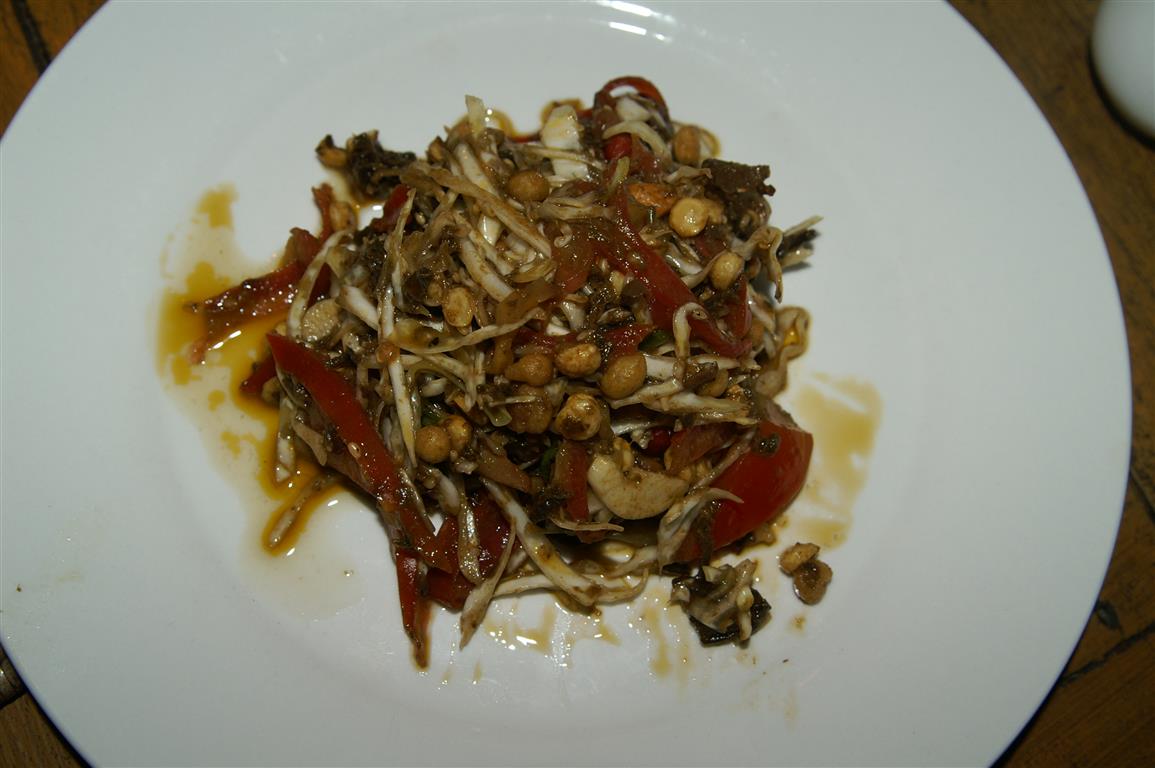
KONICA MINOLTA DIGITAL CAMERAMyanmar is one of the only countries where tea is eaten as well as drunk. By far the most popular tea dish is Laphet Thoke – a fermented tea-leaf salad.

Served with peanuts, sesame seeds, garlic, peanut oil, tomato and dried shrimp, Laphet Thoke has an unforgettable flavour and texture. Primarily served as a side dish or snack, it´s surprisingly filling.

Veröffentlicht unter Reise, Sabine’s world: A travel diary | Verschlagwortet mit , , , , | Hinterlasse einen Kommentar

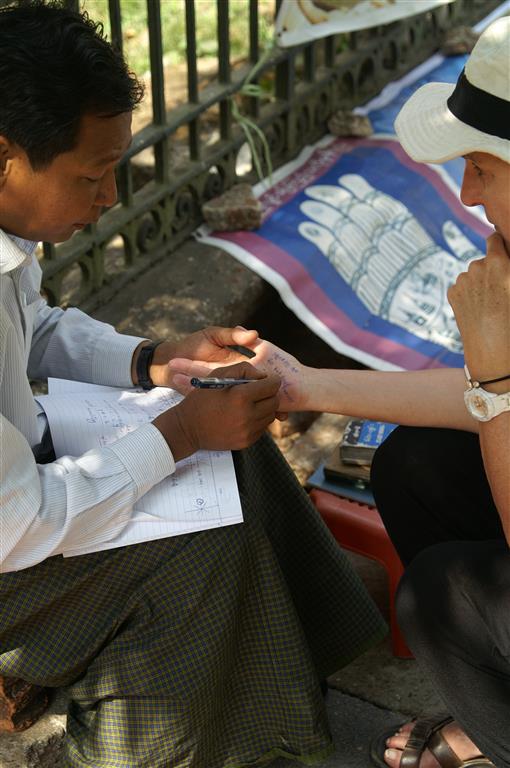
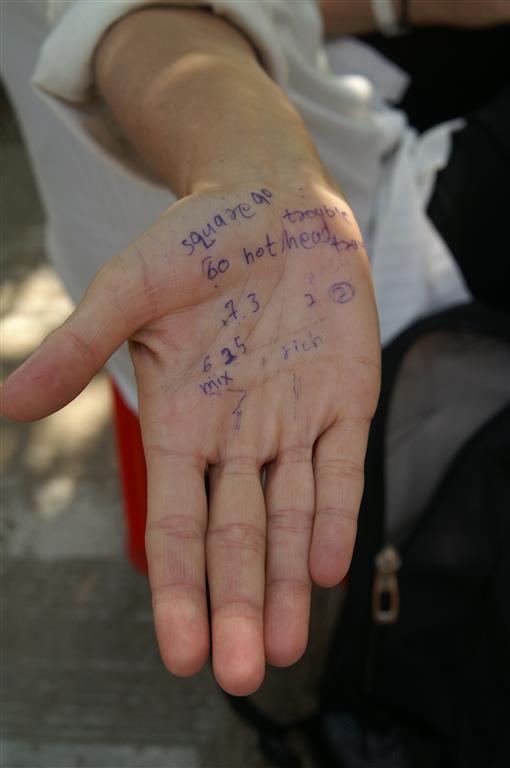
Yangon: Bei einem Wahrsager

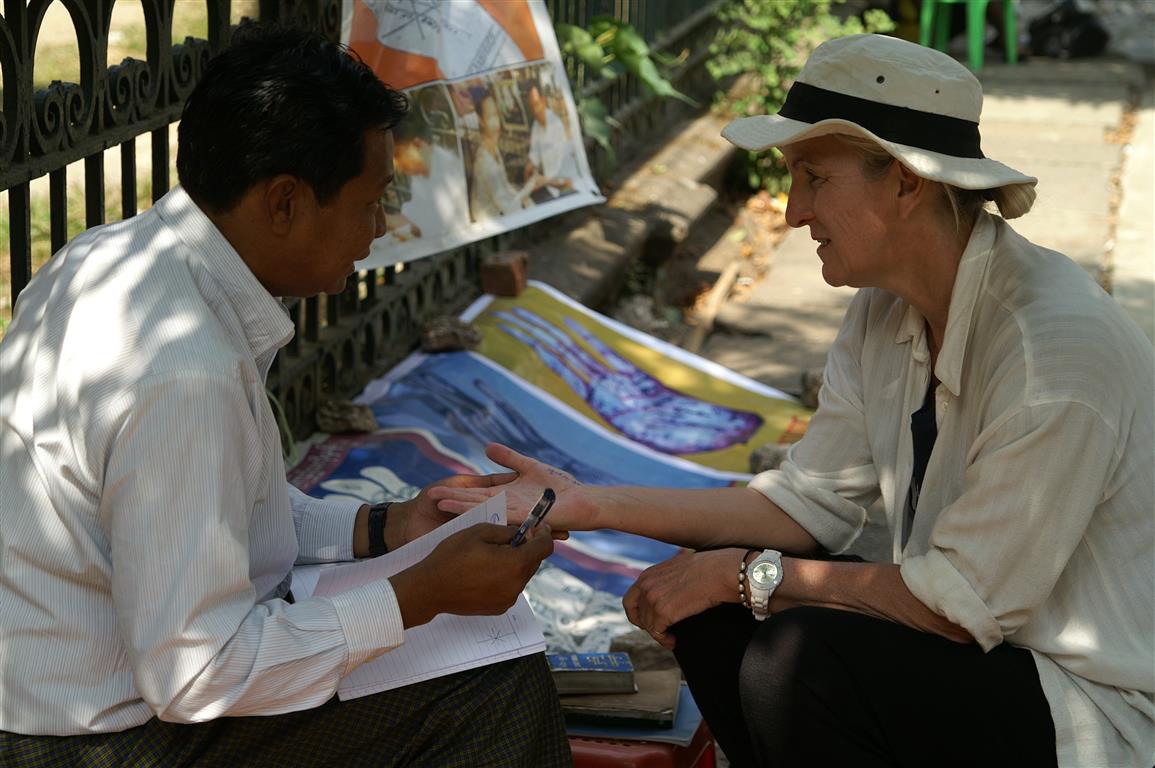
KONICA MINOLTA DIGITAL CAMERA KONICA MINOLTA DIGITAL CAMERA KONICA MINOLTA DIGITAL CAMERA„Ich kann Abstand gewinnen, Energie tanken und habe genug Zeit, über mein Leben nachzudenken. Was will ich noch erleben, was will ich überhaupt noch alles tun in Zukunft? Antworten finden, neue Perspektiven, alles wird sich weisen!“

Veröffentlicht unter Glücksbote, Reise, Sabine’s world: A travel diary | Verschlagwortet mit , , , , | Hinterlasse einen Kommentar

Trend des Tages – 23. Januar 2014

KONICA MINOLTA DIGITAL CAMERA„Die ganze Welt liegt mir zu Füßen. Vielleicht hat sie es schon immer getan. Und ich habe es nur nicht gemerkt.“

Veröffentlicht unter Reise, Sabine’s world: A travel diary, Trend des Tages | Verschlagwortet mit , , , , | Hinterlasse einen Kommentar