Erdmännchen oder Sonnenanbeter

img_7444-large

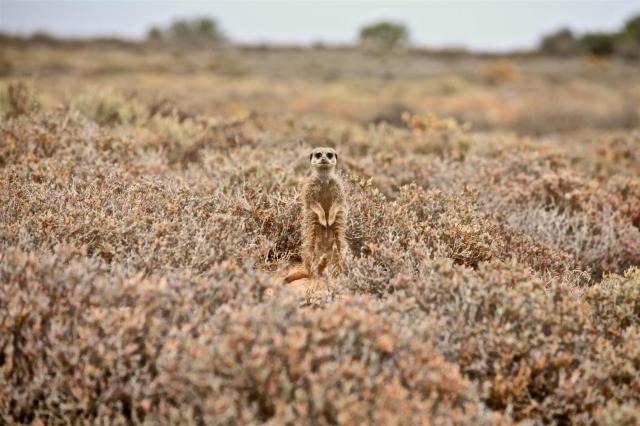
Mucksmäuschenstill sitzen wir auf den mitgebrachten Campingstühlen. Es ist kurz nach Sonnenaufgang und noch ziemlich kalt. Doch das macht den Erdmännchen normalerweise nichts aus, denn ganze Familien kommen aus der Kühle ihrer Sandbauten, um sich in den ersten Sonnenstrahlen den Bauch zu wärmen. Oh nein. Wir haben Pech. Es fängt an zu regnen.

img_7446-large

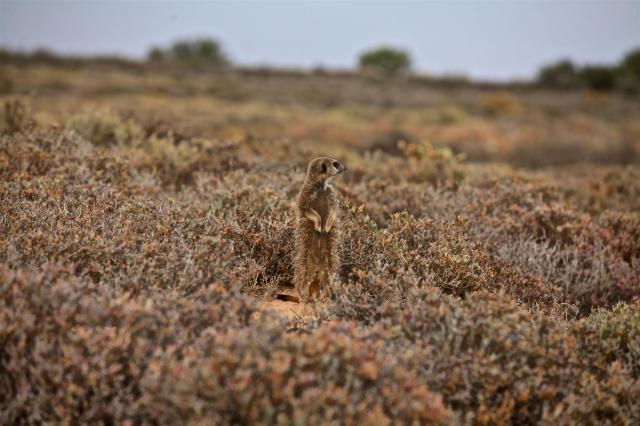
Und Regen mögen die witzigen Bewohner der südafrikanischen Steppe nicht. Überhaupt nicht. Trotzdem warten wir. Und da, plötzlich sehen wir ihn! Der Chef der Familie taucht auf, stellt sich auf die Hinterbeine und schnuppert in die Luft. Guckt rechts und links und nach vorne. Da sieht er die Aliens auf den Campingstühlen. Die ist er mittlerweile gewohnt. Er reckt sich höher und lässt sich schließlich auf seinen Po plumpsen. Jetzt sitzt er genau so da wie wir auf den Campinghockern. Was unser Erdmännchen-Abenteuer letztendlich zunichte macht sind die Regentropfen. Unser Geselle verschwindet im Bau. Das war’s dann für heute. Und morgen ist ein neuer Tag! Hoffentlich ohne Regen und mit viel Sonne!

Fotos: Enric Boixadós

Der Tour wurde von Meerkat Adventures unterstützt. Meine Meinung ist wie immer meine eigene.

Veröffentlicht unter Reise, Sabine’s world: A travel diary, South Africa | Verschlagwortet mit , , , , , | 9 Kommentare

Friedensreich Hundertwasser und seine Toiletten

thumb_p1140058_1024

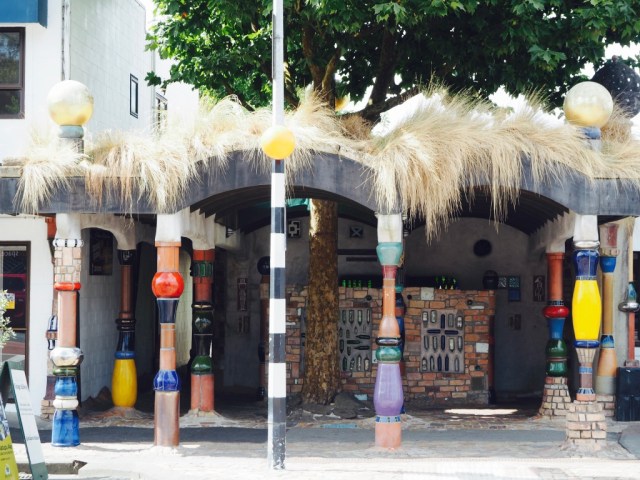
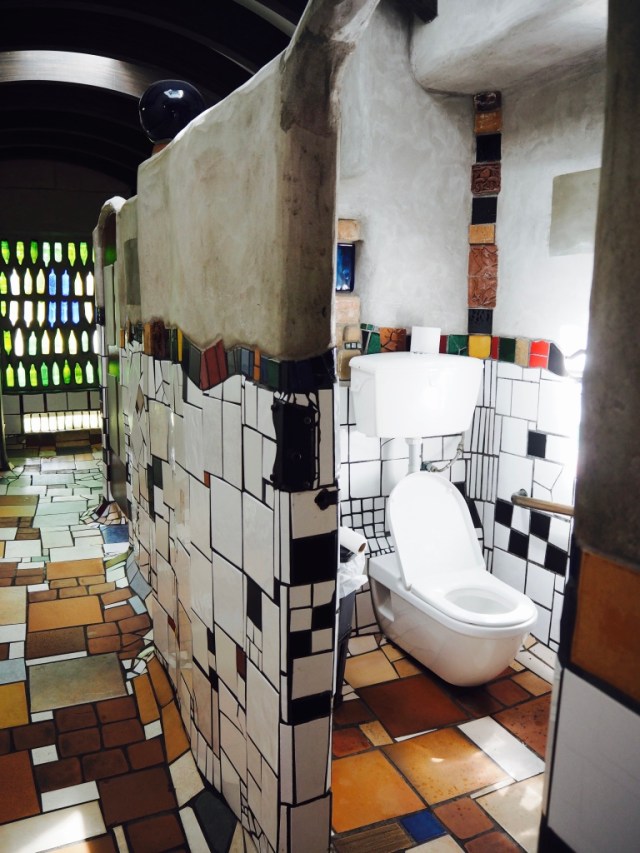
Wer von Euch kann sagen, dass er (oder sie) ins Hundertwasser-Klo pinkelte? Die öffentliche Toilette war das letzte Projekt des bekannten österreichischen Künstlers, der im Jahr 2000 starb. Er lebte zum Teil in Österreich wie auch in der Bay of Islands in der Nähe von Kawakawa, nämlich auf seiner Farm Kaurinui.

thumb_p1140059_1024

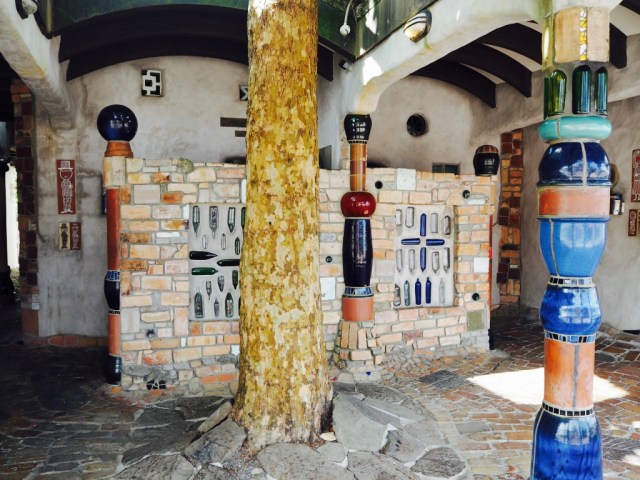
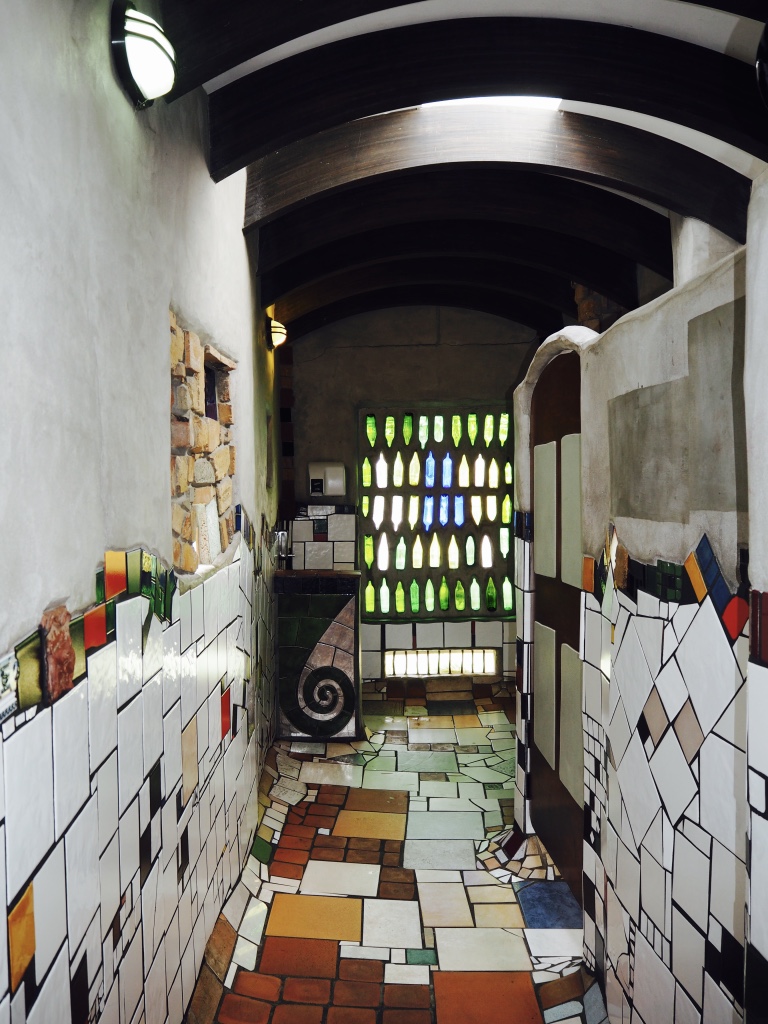
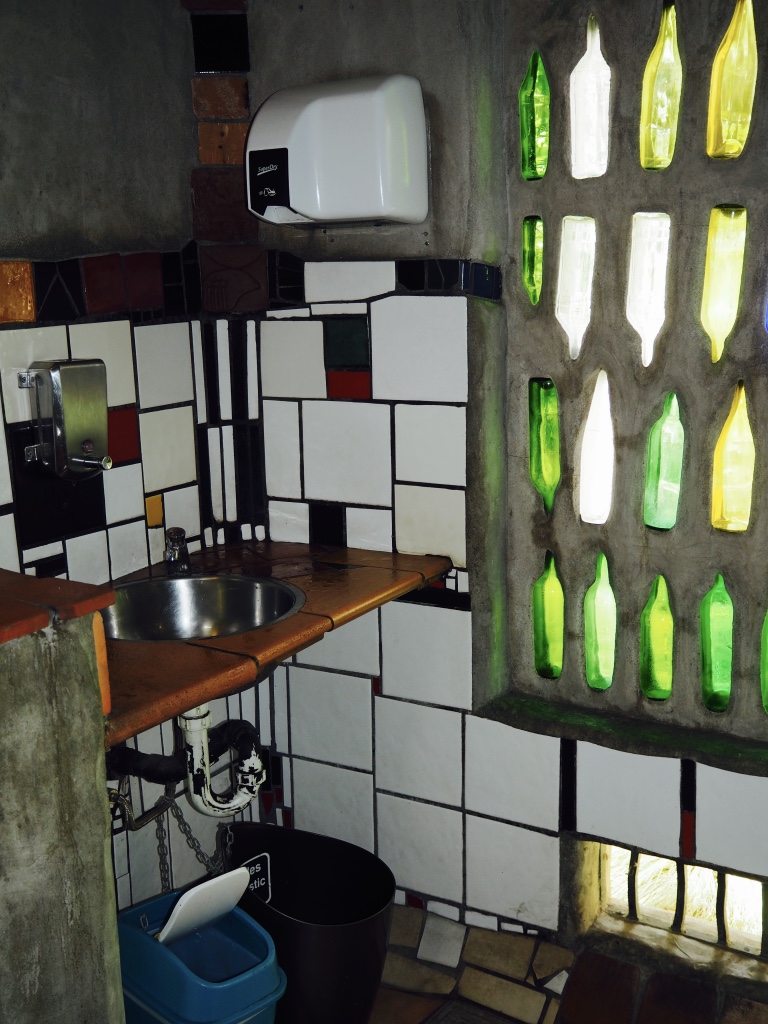
Die Toilettenanlage in Kawakawa besteht aus farbenfrohen Keramik-Säulen, bepflanztem Dach, bunten Kacheln und alten Glasflaschen als Fenster. Während der Bauphase arbeitete Hundertwasser eng mit lokalen Handwerkern oder Schülern zusammen, die Ziegel herstellten und Kacheln entwarfen.

thumb_p1140040_1024

Falls Ihr auf dem Weg in die Bay of Islands seid, biegt einfach mal von der Route ab und fahrt ins Zentrum des kleinen Ortes Kawakama. Dort sind die Toiletten nicht zu übersehen. Sie sind auf alle Fälle einen Besuch wert, auch wenn Ihr nicht müsst!!

Info: Friedensreich Hundertwasser wurde 1928 in Österreich geboren. In den frühen 1970er Jahren kam er zum ersten Mal nach Neuseeland und verliebte sich in die Bay of Islands, dem nördlichsten Zipfel der Nordinsel. 1975 kaufte er die Farm Kaurinui in der Nähe von Kawakawa. Die Staatsbürgerschaft von Neuseeland erhielt er 1986, und 1990 wurde seine Person zum „Living Treasure of New Zealand“ erklärt. Er starb im Jahr 2000 an einem Herzinfarkt während der Überfahrt per Schiff von Europa nach Neuseeland. Auf Kaurinui fand er seine letzte Ruhestätte.

Veröffentlicht unter Austria, New Zealand | Verschlagwortet mit , , , , , , , , , , , , | 2 Kommentare

Being an optimist – despite all!

thumb_p1020230_1024

„Choose to be optimistic, it feels better.“

Dalai Lama

Veröffentlicht unter Notabene | Verschlagwortet mit , , , | Hinterlasse einen Kommentar

Ghost Houses

thumb_p1070048_1024

I saw them often during my travels through Thailand. The colorful and ornate spirit houses resemble miniature temples that are strategically positioned outside every home, business, school and in public areas. But what is it all above? Spirits abound everywhere in Thailand, and Thai people go out of their way to keep them happy.

Spirit worship is probably the oldest form of religion in the world, and when Buddhism came to Southeast Asia, it developed alongside the ancient spirit worship already in place. Today many of the beliefs remain intertwined with Buddhism and form part of everyday life for Thai people. One of these practices is the use of spirit or ghost houses.

thumb_p1060003_1024

The construction can be simple. They can be constructed of wood, concrete or brick, and one often sees roadside shops with hundreds of colorful houses for sale. They are often decorated with little figurines of people and animals, incense holders and vases for flowers and some contain furniture.The position is very important. Spirit houses should never be placed where the shadow of the building will fall on it.

Families who believe in the spirit house and its importance, light incense every morning and ask the spirit to watch over and protect the home. The traditional offering include flower garlands, betel leaves, bananas, rice, chicken, duck, and a wide range of other things.

Are you planning to buy a house in Thailand? Be sure you will not upset the spirits then!

Veröffentlicht unter Reise, Sabine’s world: A travel diary, Thailand | Verschlagwortet mit , , , , , , , | Hinterlasse einen Kommentar

Lake Taupo: Maori-Felsmural

thumb_p1230066_1024

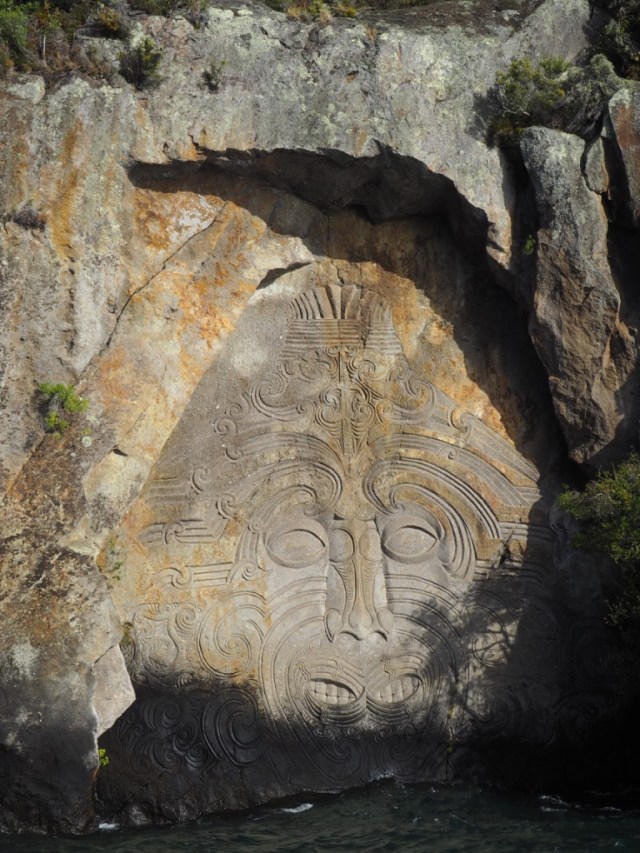
Es war Matahi Whakataka-Brightwell, ein Maori, der Ende der 1970er Jahre dieses monumentale, 10 Meter hohe Felsmural schuf. Der Legende nach zeigt es Ngatoro-i-rangi, den heldenhaften Maori-Anführer, der die Stämme der Tuwharetoa und Te Awara in die Region um Taupo brachte.

Die zweistündigen Ernest Kemp-Dampfschiff-Ausflüge gibt es 3 mal täglich. Während der Abendtour Getränke und Pizza inklusive.

Dieser Beitrag wurde von Ernest Kemp unterstützt. Meine Meinung ist wie immer meine eigene.

Veröffentlicht unter New Zealand, Reise, Sabine’s world: A travel diary | Verschlagwortet mit , , , , , , , | Hinterlasse einen Kommentar

Samahita Retreat: Katie Parsons

thumb_pc200021_1024

„At Samahita I take care of detox, weight loss and de-stress programs. So many people come with different problems and conditions. It is so rewarding to see them before and after. Many times they are completely transformed. It is really humbling for me.“

thumb_pc200018_1024

Katie Parsons, Health Programs Manager at Samahita Retreat. She is from Ireland.

Veröffentlicht unter Porträts, Thailand | Verschlagwortet mit , , , , , , | Hinterlasse einen Kommentar

Photo Diary Ko Siboya

thumb_pc280127_1024

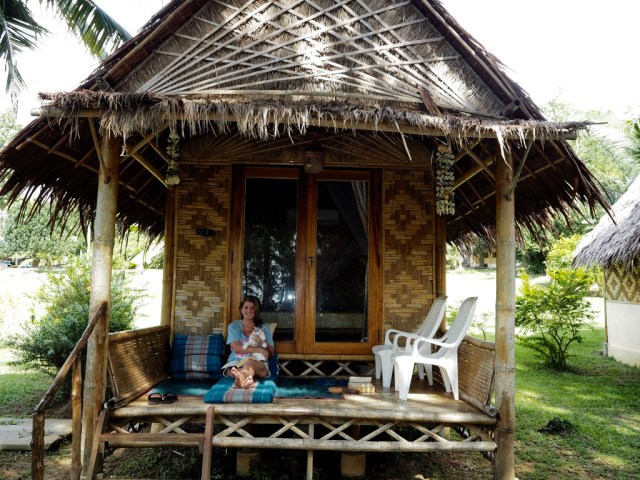
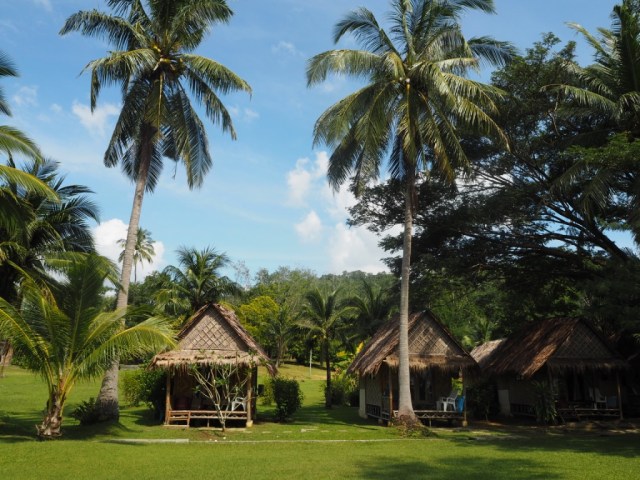
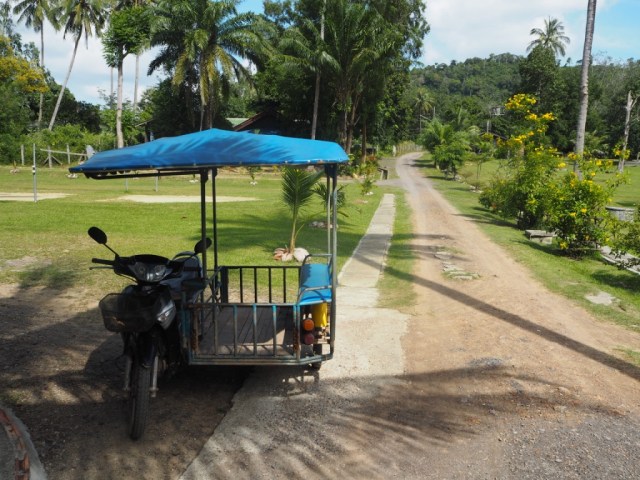
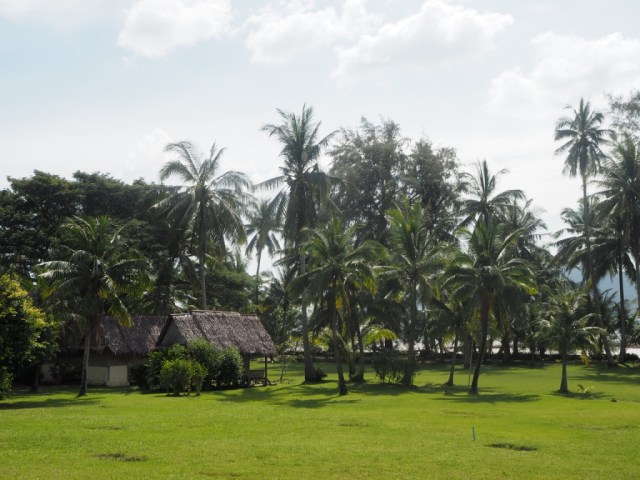
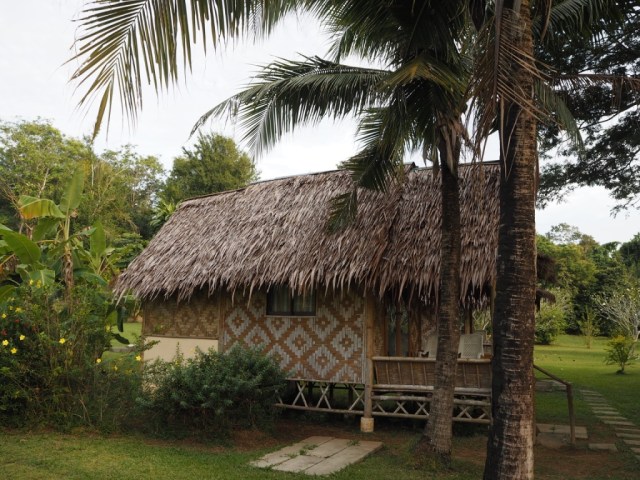
It is an unspoiled hideaway that has an unique atmosphere. For some days I just tuned in to the slow culture here, imbibed the peace and recharged my batteries with the soundtrack of the lapping waves after 10 days of a Detox retreat.

I brought some pictures with me. Enjoy them and dream!

thumb_pc290184_1024thumb_pc280121_1024thumb_pc280122_1024thumb_pc280123_1024thumb_pc290170_1024thumb_pc280162_1024thumb_pc290178_1024thumb_pc280160_1024

Veröffentlicht unter My Sabbatical, Reise, Sabine’s world: A travel diary, Thailand | Verschlagwortet mit , , , , , , , , | 2 Kommentare

Foto der Woche – Social Media

thumb_p1130004_1024

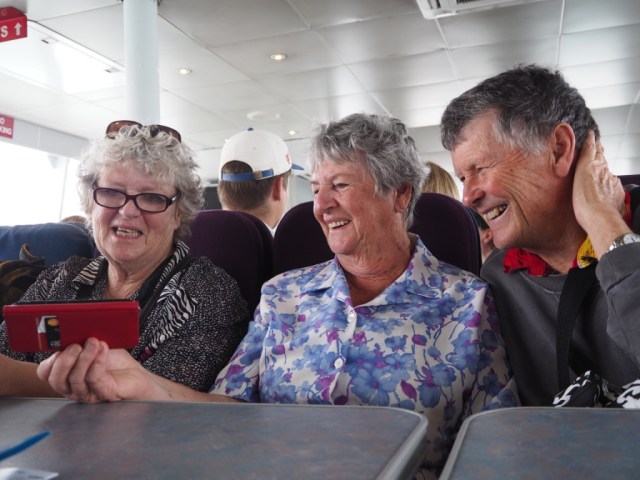
Ich wünsche Euch allen, dass Ihr beim Surfen im Internet genau so viel Spaß habt wie diese 3 Damen hier, die sich freuten, dass ich sie auf der Fährüberfahrt nach Waiheke Island geknipst habe.

Neuseeland, Januar 2017

Veröffentlicht unter Foto der Woche | Verschlagwortet mit , , , , | 2 Kommentare

Photo Diary: Schwimmbad, Coromandel Town

thumb_p1180033_1024thumb_p1180035_1024

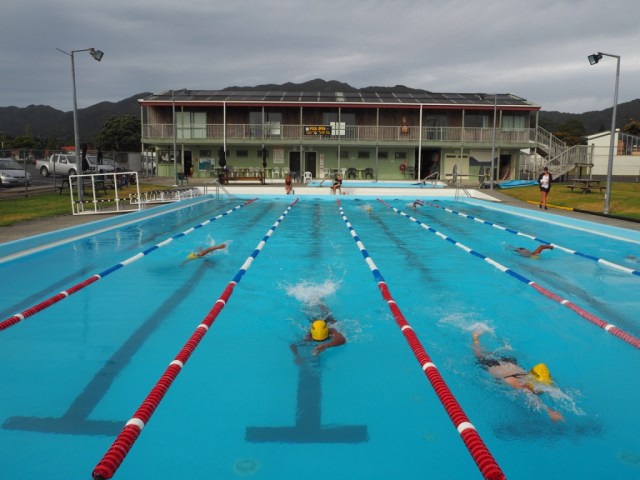
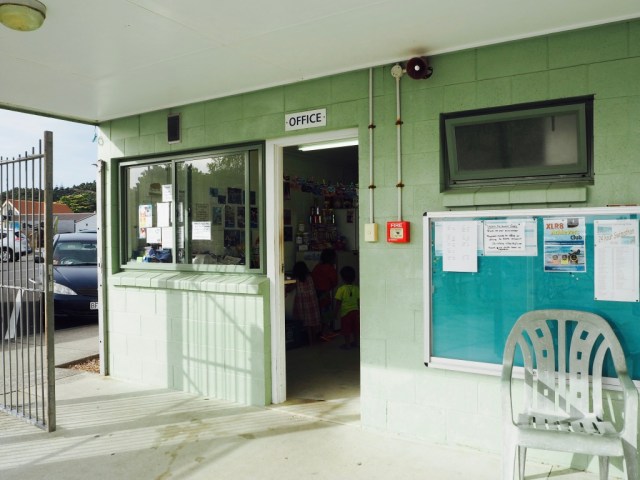
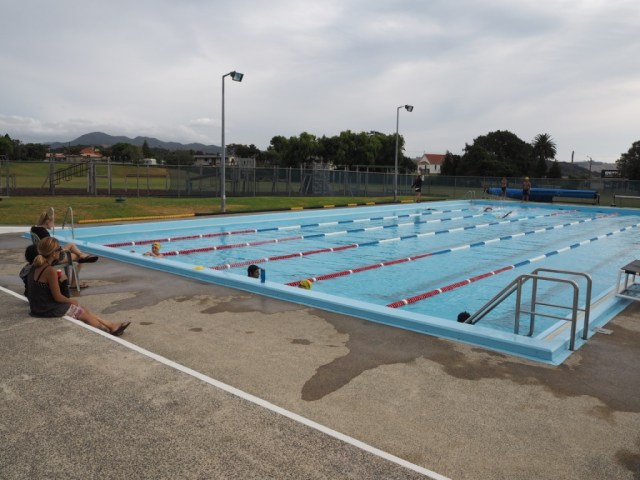
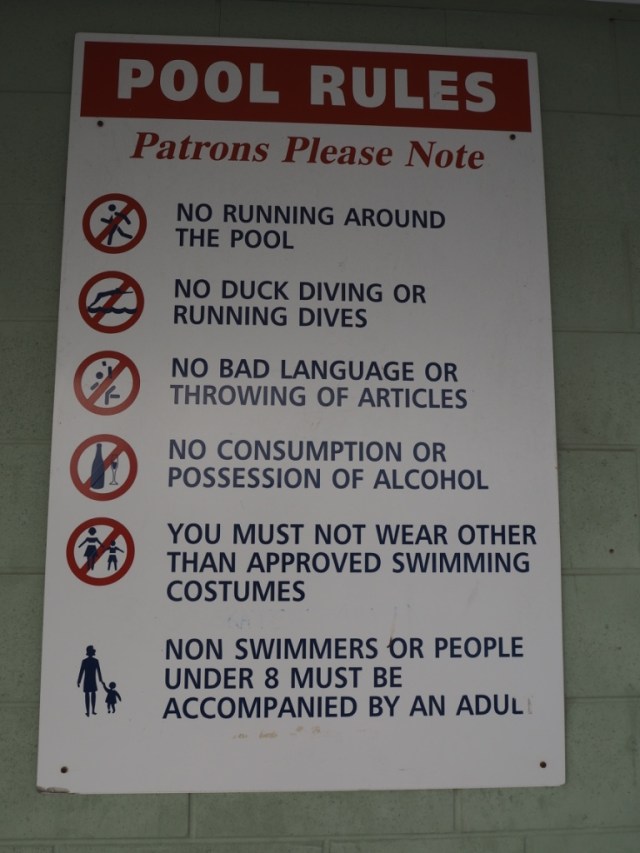
Ich mag Schwimmbäder. Und wenn ich unterwegs bin, gucke ich sie mir gerne an. Wie das hier in dem idyllischen Ort Coromandel Town, der selbst ein Überbleibsel aus der Vergangenheit ist. Und das Schwimmbad hat sich den Flair des ewig Gestrigen erhalten. Irgendwie rührend! Grund genug, es in ein paar Bildern festzuhalten.

thumb_p1180029_1024thumb_p1180034_1024

Veröffentlicht unter New Zealand, Reise, Sabine’s world: A travel diary, Sailing, Surfing, Swimming Pools | Verschlagwortet mit , , , , | Hinterlasse einen Kommentar

Confessions of a Ranger: Brendon Strydom, 32 years old, Gondwana Game Reserve

KONICA MINOLTA DIGITAL CAMERA

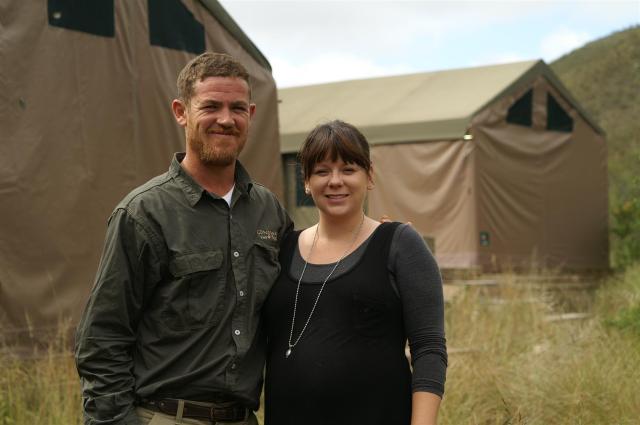
Brendon Strydom with his wife Stevie.

„My grandfather had a farm, right outside the city I grew up. My town is called Nelspruat, next to Krueger National Park in South Africa. I was always there. At the weekends, at all of my school holidays. I have a brother who lives in London, We are completely different, he is a mechanical engineer. He likes the city life. Me not. My way of leaving legacy is conservation work in the bush. I want to give something back to the nature, to our world.

One day, when I have to die, I like something of me is there. Others write books, I do conservation work. Everything started at an early age. You need to understand the bush, the animals, the people. As a child I did enjoy the insects, the plants, the pure nature. After, I understood the connections. If you remove something from the chain, everything will collapse. That’s it. I decided to study nature conservation at Pretoria University. After 3 years I got my diploma. My first job was in the National Park of KwaZulu-Natal for 3 years.

Krueger National Park was next. For 8 years. My family was near by and I really enjoyed more and more becoming a Ranger. I got a gun licence but I never ever shot an animal. One time I had to do a warning shot for a buffalo. Crazy buffalos!! I met my Australian wife at Krueger Park. She is a Zoologist. Then I went on to Limpopo Game Reserve. And now here at Gondwana Game Reserve I also educate pupils. Many of them are coming from very poor families. Big eyes when they see for the very first time rhinos and lions. I like that. I talk to them about conservation work, I show them the animals. Kids always give you 100 percent of attention.

Rhinos, yeah, the rhinos. I love them. I am sad about them. They are getting killed every year by poachers. My view is: We get 10 years left and then there will be no rhinos anymore in the wilderness. Sad, sad, sad!

I am very nervous. I will be a dad in a few weeks. For the first time. I think my kid won’t see anymore a wild rhino and this breaks my heart. A rhino horn grows every year for about 2 Centimeters. The Asian market pays 50.000 Euro for a kilogram of Rhino Horn. The poachers will remain. There are so many.

Our rhinos are protected. They have 24 hours armed bodyguards. But the guards cannot just shoot a poacher. Only when the poacher threatens them they are allowed to shoot. But when the poachers are shooting the animal they can’t do anything. Devastating! It is the South African law system. I do not have any answer. The poaching problem will remain. For ever! At least, until people change its mind.“

Thanks, Brendon, for the interview.


Veröffentlicht unter Porträts, South Africa | Verschlagwortet mit , , , , , , , , , , | Hinterlasse einen Kommentar