
Trogir/Kroatien/September 2012

Trogir/Kroatien/September 2012

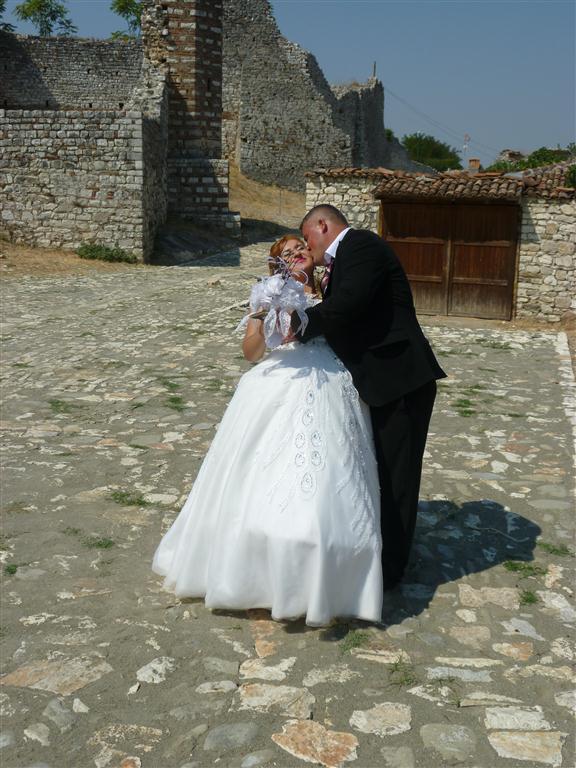 Berat/Albanien/September 2012

 Wie praktisch! Nach der Geldausgabe steht gleich der „Papierkorb“ für die Belege bereit. Gesehen in Ulcinj/Montenegro.

 Tirana/Albanien/September 2012

 Eine tolle Einladung für uns Vierbeiner, nicht wahr? Entdeckt am Eingang einer Bar in Bled/Slowenien. Schade, dass ich diesmal nicht mit auf Tour bin!
Gaston grüßt Euch aus der Hundepension.

 Ulcinj/Montenegro/September 2012

 September 2012
On the road again. Travelling combining with work and pleasure – how enjoyable! This time my final destination will be Albania. Enric, my husband, is joining me. First we planned to bring our dog Gaston, but the vet told us not to do, because Montenegro and Albania are Non-EU-countries and it could be difficult for him to re-enter in the EU again. Thus, in the last moment we changed our plans and we had to look for a new dog sitter near our home town, since the usual dog sitter has been in holidays.
Problems solved and with everything arranged we started the long car ride down south.
Slovenia
Summer rain at our arrival in Bled/Slovenia. We just stayed for the night. Bled is a holiday spot in Northern Slovenia shortly after the Austrian border. The city lies on the banks of Lake Bled with a tiny island in its middle which was frequented as early as in prehistory. The Slovene poet France Preseren (1800-1849) wrote: “The country holds no nicer place than this second Eden, full of charm and grace.”
Bled gained its international reputation mostly due to its sanatorium. The place which was in the early 20th century the finest health resort in the Austrian empire, attracted numerous members of the European aristocratic elite. After World War II, one of the most beautiful residences of the former state stood here, and people came from all over the world. In the last few decades the place has been discovered by “the new age pilgrims”. Our hotel Krim (http://www.hotel-krim-bled.com/) reminded me of the socialist era and had the charm of the 1970s.
As I mentioned before, we only stayed one night and it was raining. Autumn was starting.


Croatia
Hot, hot, hot. About 30 degrees outside temperature. We have been glad about our decision, to bring doggie not with us, since he is more the winter type of dog!
The new highway just started after entering Croatia. Not much traffic, a pleasant drive in an aircon car. We had booked a place between Split and Trogir in Middle Dalmatia, called Kastel Luksic and arrived there in the late afternoon (www.villa-cezar.com). Where to go for dinner? Nearby are the towns of Split and Trogir, both cities are rich in history and located directly at the sea. We decided for Trogir, since we had been in Split years ago. And Trogir was fascinating. Declared 1997 as world heritage site it has many narrow streets, no cars, a cathedral and an outstanding location at a small island, only accessible by bridges. So we had dinner at a nice outdoor restaurant in the middle of town.


Next morning we got off early and took the local transport to Split, about half an hour busride from Kastel Luksic. We took breakfast in the Café Luxor, situated in the old town between Roman columns. Split is a beautiful Roman city at the Dalmatian coast, with only far too many tourists at that day. After a walk along the Riva, the so called seafront with restaurants and souvenir shops, and a quick visit of Diokletian’s palace we had to start for the next, almost 400 Kilometer ride down to Montenegro. We bypassed Dubrovnik, this stunning city and cruise destination in Southern Dalmatia and planned to visit it on the way back.


Montenegro
Some 30 Kilometers more and we crossed the border into Montenegro. Here everything seemed different, more slowly, another rhythm of time. Highways doesn’t exist in this country, we had to take it quiet, passing along the rural streets near the coast. Montenegro has a tiny coastline where life goes on – buildings, hotels, shops. Behind there are black mountains, nothing else, like in a fairy tale. Montenegro is outstanding and mysterious at the same time. And the most stunning thing is: That country has no own currency. It does not belong to the EU, but its currency is the Euro. Nothing else! Since the abolition of the Dinar, the former Yugoslavian money, it turned first into German Mark and now into Euro. How clever!
We did not believe how much the narrow roads between mountains and ocean slowed us down. It got dark. We only saw the mountains as a black background. Finally we got to Ulcinj, a small town near the Albanian border. Here we had booked a hotel for the night. And, last but not least, it was difficult to find the address. After a phone call to the hotel owner he told us to drive back for about 400 Meters. There he will be waiting for us at the street in yellow shorts, blue T-Shirt and waving hands. And indeed, he was waiting on the street and directed us some meters to his hotel.
The arrival there was like homecoming, because suddenly we had been surrounded by German tourists. The most of them are coming here every year. No wonder. Great rooms for a reasonable price, good food, and a warm and hearty atmosphere by the owner, his staff and the guests. He introduced himself as Ibrocevic Dzovdet, simply called Jeff. He is from Montenegro, was living many years in Stuttgart and therefore he knows German temper as well as the wishes of the guests. We ended up sitting till late on the terrace, eating, drinking and chatting. Was a great evening at http://www.villa-primafila.de and/or http://www.primafila-holidays.com
What I should not forget to mention are the wonderful fruits which you can get by farmers at the roadside. Plums, grapes, melons, nectarines and figs are available in best quality and very cheap. Before we continued our travel we spent the morning wandering around the old town of Ulcinj. The narrow streets have been full of 1970s and 1980s cars, in between the new and shiny Mercedes, BMWs and SUVs of the young rich upper class.
Near the old town is a small beach. It is a well known holiday spot for Montenegro people, Albanians and Kosovo-Albanians. They are lying on the beach with almost no space between them, you only see towels, bodies and sun umbrellas. Many love to cover their whole bodies with sand. I asked why! Jeff told me, the sand here is apparently good for rheumatic deseases. That’s why!
At the opposite site of the town is a 13 Kilometers long sandy beach and the nudist island of Ada, which stands as a natural border between Montenegro and Albania. We left with the feeling that in a couple of years this area will be a new holiday destination for travellers from all over the world which do prefer now Italy, Spain or Greece. Not to forget the Russians which cover already now the main part of tourists in Montenegro. Still the country is rural, not much discovered by the usual tourist crowd. I will have a closer look on its development in the future.


Photo Collage Title: Nicola Mesken (www.nicola-mesken.com)
All other photos: sl4lifestyle

… heißt meine neue Kolumne.
NEW + NEW + NEW + NEW + NEW + NEW+ NEW + NEW + NEW + NEW
Da ich beruflich und privat immer mal wieder unterwegs bin – wie zum Beispiel für zwei Nachrichtenagenturen – wurde ich gefragt, ob ich nicht ein klein wenig mehr über meine Reisen berichten könnte. Es geht hier weniger um die Storys an sich, sondern vielmehr um die Begegnungen am Wegesrand, die kleinen skurillen Dinge, die Unterwegssein erst so richtig interessant machen.
Lasst Euch überraschen!
Da ich immer mehr internationale Leser habe, werde ich die Kolumne mal auf deutsch, mal auf englisch schreiben.
Viel Spaß! Online in wenigen Tagen!
NEW + NEW + NEW + NEW + NEW + NEW+ NEW + NEW + NEW + NEW
For my international readers!
„Sabine’s world: A travel diary“ is the name of my new column, which will be online soon. As a correspondent for news agencies I won’t write about my stories, but about the little things in life which make travelling most enjoyable.
Soon more! In a couple of days!
NEW + NEW + NEW + NEW + NEW + NEW+ NEW + NEW + NEW + NEW


 Schon mal was von einer Kleidertauschbörse gehört? Nein? Dann werden Sie bald mehr darüber erfahren. Denn es gibt eine neue Bewegung, die rasant wächst. Viele Menschen, darunter auch einige meiner Freundinnen, wollen lieber Gebrauchtes tauschen, statt Neues zu kaufen. Dabei geht es nicht um Sparsamkeit oder Geiz, sondern vielmehr um Spaß, Gemeinschaftsgefühl und natürlich auch um Umweltschutz.
Auf so genannten „Swap-Partys“ wird diese Leidenschaft für neue Lieblingsstücke mit Gleichgesinnten geteilt. „To swap“ bedeutet ganz einfach tauschen und das Partymotto lautet somit auch „Geben und Nehmen“. Eigene Fehlkäufe können so leicht kompensiert und eingetauscht werden. Das Prinzip ist einfach: Accessoires, Kleider oder Mäntel, die getauscht werden sollen, bringen zwischen einem und vier Punkte, die beim „Shoppen“ eingelöst werden können. Dass das den Geldbeutel und die Umwelt schont, ist ein angenehmer Nebeneffekt. Am begehrtesten ist zweifellos der große Spiegel vor der provisorischen Umkleide. Was macht es doch für Freude, auf einer Swap-Party Klamotten-Ballast loszuwerden, anstatt kurz vor Tagesanbruch schlecht gelaunt und hundemüde seinen Tapeziertisch auf einem Flohmarkt aufzubauen. „Das Internet hat eine Renaissance der alten Tauschprinzipien entfacht, die noch in der Generation unserer Großeltern bekannt waren“, sagt Konsumforscher Michael Kuhndt. Und Rachel Botsman aus England meint, dass der Trend zum Teilen und Tauschen keineswegs nur ein kurz aufflackerndes Blitzlicht infolge der globalen Finanzkrise sei. Denn Millionen Menschen aus allen Teilen der Welt nähmen bereits am neuen Konsumstil teil. Und das New Yorker Time Magazine erklärt den Trend sogar zu einer der „10 Ideen, die die Welt verändern werden.“ Schließlich sorgt er in unserer immer anonymer werdenden Gesellschaft für größeren Zusammenhalt unter den Menschen. Und nicht zu vergessen ist das steigende Umweltbewusstsein. Denn laut dem Münchner Verein Green City reist eine einzige Jeanshose erstmal 64.000 Kilometer durch mehrere Kontinente, bevor sie in Deutschland getragen wird. Und für die Produktion eines Baumwoll-T-Shirts werden 2.500 Liter Wasser verbraucht. In der Tat – unsere Kleidung sollte mehr Respekt und Beachtung bekommen.
Kürzlich hat mir meine Freundin in Barcelona eine große Tasche voller Klamotten mitgegeben. Sie wolle mal wieder was Neues! Soll mir recht sein, gerade wenn Prachtstücke von Mango, Zara, H&M, Tommy Hilfiger und Divided darunter sind. Zwar passen mir nicht alle, aber es gibt ja noch jede Menge interessierter Freundinnen!
www.klamottentausch.net
blog.commonvintage.com
Haben Sie auch Lust auf Kleidertausch bekommen? Berichten Sie doch mal über Ihre Second Hand-Schätze hier im Blog!
Übrigens: Ihre Mailadresse wird nicht veröffentlicht, und als Name ist ein Vorname vollkommen ausreichend.

Ausstellungsort:
Kunsthalle Würth
Lange Straße 35
74523 Schwäbisch Hall
Öffnungszeiten: täglich 11–18 Uhr
Eintritt: frei
Die mexikanischen Maler begeistern mich schon lange. Genaugenommen bin ich mit Frida Kahlos Bildern zum ersten Mal Anfang der 1990er Jahre bei einem Besuch in New York City in Berührung gekommen. Im Metropolitan Museum wurden ihre Bilder gezeigt; damals kannten sie die wenigsten. Die Jahre danach wurde Frida Kahlo zum Idol einer ganzen Generation, alles war in, was sie vertrat: Ihre Mode, ihre Malerei, ihr Leben mit allen kaum vorstellbaren Demütigungen, Schmerzen, Lieben und Erfolgen. Es folgten Filme über ihr Leben, CDs mit passender Musik, Modeschmuck à la Kahlo und unzählige Bücher über sie, ihre Affären und ihre unendliche Liebe zum mexikanischen Enfant terrible Diego Rivera.
Aus der 1954 verstorbenen Frida Kahlo wurde ein Kultstar. Ihr später Ruhm wärt bis heute.
Ihre Malerei:


Mit rund 300 Werken herausragender Vertreter der mexikanischen Kunst des 20. Jahrhunderts beleuchtet die Ausstellung das Phänomen der MEXICANIDAD, jener spezifisch mexikanischen, schwer zu fassenden und sich beständig selbst hinterfragenden Mentalität, die aus der Geschichte der ebenso jungen wie hybriden Nation hervorgegangen ist. Werke von Frida Kahlo, Diego Rivera, Rufino Tamayo, Francisco Toledo und Adolfo Riestra – darunter viele Hauptwerke – werden im Hinblick auf ihre nationale Identität befragt.
Diego Rivera:


Rufino Tamayo:

 Francisco Toledo:
 Adolfo Riestra:

Fotos mit freundlicher Genehmigung der Kunsthalle Würth/Schwäbisch Hall.
Buchtipp: Eines meiner Lieblingsbücher über Diego Rivera, leider schon vergriffen und nur noch im Antiquariat erhältlich.
Elena Poniatowska: Lieber Diego, 78 Seiten, Suhrkamp Taschenbuch, 1989.
Es sind Briefe einer russischen Malerin in Paris aus den Jahren 1921/22 an ihre unerfüllte Liebe in Mexiko, Diego Rivera.
Auszüge:
„Ich sehe den grauen Himmel und stelle mir Deinen vor, der ungeheuer blau sein muss, so wie Du ihn mir beschrieben hast. Ich hoffe, dass ich ihn eines Tages sehen werde und schicke Dir bis dahin alles Blau, das ich habe, küsse Dich und bin wie immer Deine Q.“
„Nun ja …, ich könnte unaufhörlich weiterschreiben, aber da Du ja wenig Zeit zu vergeuden hast, wird dieser Brief vielleicht schon zu lang. Es ist sinnlos, Dich zu bitten, dass Du mir schreibst, Du solltest es aber mal tun. Beantworte mir vor allem diesen Brief, mit dem ich Dich zum letzten Mal belästigen werde, schreibe so, wie Du es für richtig hältst, aber en toutes lettres. Du brauchst mir nicht viel Erklärungen zu geben, ein paar Worte genügen schon, auch ein Telegramm, Hauptsache, Du sagst es mir. Zum Abschied umarme ich Dich zärtlich, Q.“
Nachtrag: Als Q. es nach 13 Jahren endlich schaffte, nach Mexiko, ins Land ihrer Träume, zu reisen, suchte sie Diego nicht auf. Sie wollte ihn nicht belästigen. Als sie sich einmal bei einem Konzert im Palacio de Bellas Artes begegneten, ging Diego an ihr vorbei und erkannte sie nicht einmal wieder.
Nach einer wahren Geschichte.
Mehr über die Leidenschaft von Frida Kahlo zu Diego Rivera hier im Blog:
https://sl4lifestyle.wordpress.com/2012/08/27/frida-kahlo-schreibt-1949-in-ihr-tagebuch/


